
Consistently missing delivery dates is rarely caused by a single issue. Discover the most common causes of poor delivery performance in manufacturing and learn how operational improvement can reduce lead times, improve flow, and increase on-time delivery.

Many manufacturing leaders ask the same question:
"Why is our factory always late?"
Late deliveries are often treated as a scheduling problem, but in reality they are usually the result of deeper operational issues that have developed over time.
Missed delivery dates can affect customer satisfaction, increase operational pressure, reduce profitability, and create constant firefighting throughout the business.
In many factories, teams work extremely hard to recover lost time, yet delivery performance continues to fluctuate because the underlying causes remain unresolved.
Improving delivery performance requires organisations to understand how work flows through the operation and identify the constraints, delays, and inefficiencies that are preventing products from moving smoothly from order to shipment.

High levels of work in progress create congestion throughout the factory.
When too many jobs are released into production at the same time, queues increase, priorities become unclear, and lead times grow longer.
Every operation contains constraints that limit output.
When bottlenecks are unmanaged, work begins to accumulate, causing delays that ripple through the entire production process.
Constantly changing priorities often creates more disruption than improvement.
Jobs are started but not finished, resources become stretched, and production flow becomes increasingly unstable.
Many organisations struggle because they lack clear visibility of operational performance.
Without reliable information, it becomes difficult to identify where delays are occurring or what actions will have the greatest impact.
When teams spend most of their time responding to problems rather than preventing them, operational performance becomes difficult to control.
Firefighting may solve today's issue but often creates tomorrow's delay.
Without effective planning, monitoring, and performance management systems, organisations often rely on individual effort rather than structured operational control.
This makes delivery performance difficult to sustain.
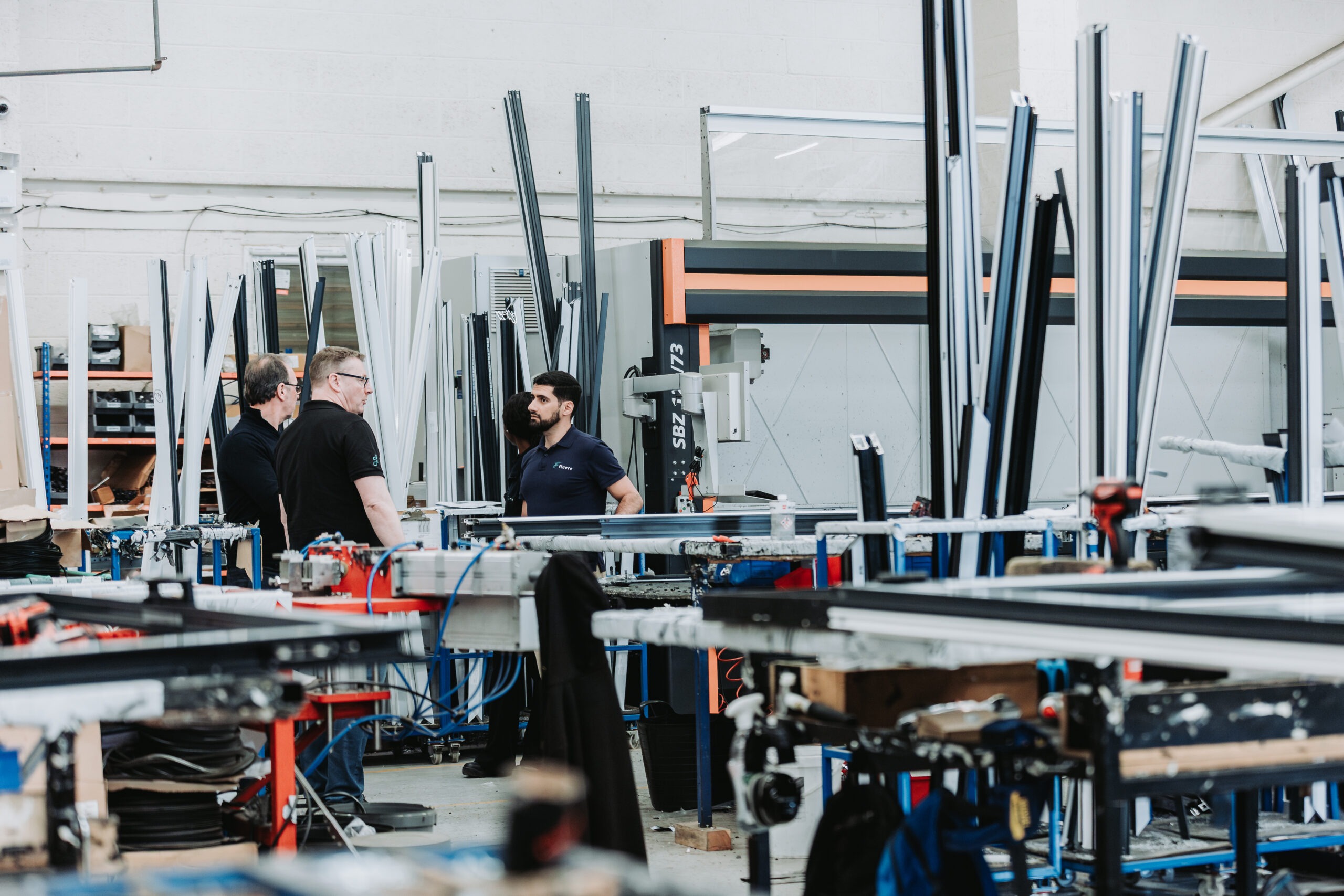

Too Much WIP
Excessive work in progress slows operational flow, increases waiting time, and makes it harder to prioritise the right work.
Unmanaged Bottlenecks
When constraints are not identified and actively managed, delays quickly spread across the entire operation.
Lack of Operational Control
Without clear operational controls, performance becomes reactive rather than predictable, leading to missed delivery commitments.
Improving delivery performance is rarely about asking people to work harder.
The greatest improvements usually come from improving how the operation functions as a system.
By reducing work in progress, improving operational flow, managing bottlenecks, and strengthening operational control, organisations can significantly improve on-time delivery while reducing operational stress.
Many manufacturers discover that late deliveries are simply a symptom of wider operational challenges. Once these underlying issues are addressed, lead times shorten, productivity improves, and delivery performance becomes more predictable.
This is why successful operational improvement programmes focus on creating clarity, improving flow, building capability, and embedding operational control systems that sustain long-term performance.
But success makes it worth it.
Keeping costs down whilst increasing productivity and profit is at the heart of every business. Here at Fluere we are specialists in analysing businesses to identify where your factory can improve and drive better results.
We help UK manufacturers achieve and sustain market-leading efficiency by significantly reducing downtime, improving throughput, and increasing operational performance.
Email us at info@fluere.co.uk to find out what we can do for your business.